EURO Doctoral Dissertation Award 2026 - Finalists
The Four finalists of the 2026 EURO Doctoral Dissertation Award are:
Fabian Akkerman, University of Twente
Machine Learning for Sequential Decisions in Logistics

This thesis explores how machine learning (ML) enhances sequential decision-making in logistics under uncertainty, complementing operations research methods. Through real-world collaborations, it tackles challenges in supply logistics (inventory control, dual sourcing), distribution logistics (vehicle routing, last-mile delivery), and revenue management (out-of-home delivery, time slot pricing). It distinguishes data analytics (prediction) from decision analytics (policy learning), proposing a framework for integrating ML into logistics operations.
Bart van Rossum, Erasmus University Rotterdam
Optimising Fair Work Allocation: Applications in Railway Crew Planning

In many real-life settings, the size and complexity of work allocation problems necessitate the use of operations research (OR) techniques. Traditionally, OR models have prioritised efficiency objectives, such as cost minimisation. However, there is a growing interest in methods that ensure fair work allocations. This thesis applies OR techniques to design models and methods that achieve fairness in work assignments.
The first part of this thesis focuses on railway crew planning, addressing practical problems that arise in the proposed crew planning process of Netherlands Railways. The first study considers tactical crew scheduling, introducing a Benders decomposition approach for robust template selection. The second study examines fair operational crew scheduling under the assumption that template-based rosters have already been constructed. It proposes a tailored column generation heuristic to construct individual crew schedules that are fair over time. The third study presents an efficient exact pricing algorithm to accelerate column generation algorithms for basic railway crew scheduling problems.
The second part of this thesis takes a more theoretical perspective, developing general optimisation methods for fairness-oriented work allocation. The first study centers on fairness over time in settings where work must be assigned online to homogeneous workers. It provides theoretical and experimental justifications for using an intuitive work allocation policy. The second study investigates branch-and-price methods for minimising the range and other order-based objective functions, introducing a generic branching rule that enables the use of classical, efficient branch-and-price methods for this type of problem.
Tao Wen, University of Manchester
Data-Driven Modeling and Analytics for Information Propagation and Decision-Making in Social Networks

Social platforms have become a central part of today’s digital ecosystem, significantly affecting information diffusion, belief updating, and the emergence of collective decisions. These developments raise an important challenge for operational research and decision science: how can decision-makers act responsibly and effectively in large-scale, uncertain, heterogeneous, and dynamic networked systems? This dissertation addresses this challenge by developing theoretical, data-driven, and explainable models to support decision analysis and reasoning in large-scale social networks under uncertainty. In particular, generalized Bayesian inference is operationalized as a unifying modelling language for networked environments, representing partial knowledge and uncertainty, integrating heterogeneous and conflicting evidence, and supporting interpretable reasoning. Specifically, the dissertation investigates several interconnected studies, including information flow and communication behaviour in organizational networks through large-scale data analytics, influential-user identification through heterogeneous and conflicting evidence integration, propagation source localisation from sparse early-stage observations, and belief evolution and the emergence of collective decisions among socially embedded decision-makers. These studies connect individual-level behaviour with system-level network outcomes, supporting timely decision-making under uncertainty and limited information in social networks. Evaluations on real-world and synthetic networks demonstrate the applicability, robustness, and practical relevance of the proposed models. Overall, the dissertation extends explainable decision analytics to networked social systems in which uncertainty, interaction, and structural complexity are fundamental features of the problem.
Bárbara Rodrigues, University of Edinburgh
Linear Bilevel Optimization and Applications in the Grid Integration of Energy Storage
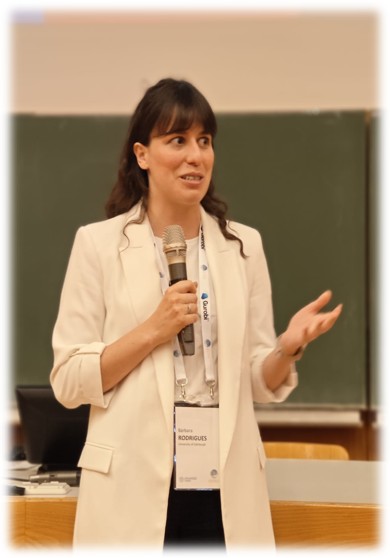
Despite only having been introduced in the 1930s, bilevel optimization has rapidly gained researchers’ interest as a useful hierarchical modelling framework for numerous applications. In particular, bilevel optimization has been playing an important role for studying the effective integration of energy storage systems into the energy grid, a pivotal step for addressing challenges in decarbonizing the energy sector as we shift to renewable-powered networks. Within this context, this thesis explores key theoretical aspects of bilevel optimization and practical applications in grid-integration of energy storage, and it is composed of three main research contributions. First, we investigated unboundedness in bilevel and multilevel optimization, an often overlooked issue as most research assumes boundedness. In this first contribution, we show that deciding whether an optimistic linear bilevel problem is unbounded is strongly NP-complete, and that the hardness part of this result is valid for the pessimistic formulation. In general, we show that deciding unboundedness of an optimistic k-level problem is Σp k−1-hard for linear problems and Σp k-hard for mixed-integer problems. We also propose two algorithmic approaches for detecting unboundedness and compare their performance through computational experiments. In the second part of this thesis, we focus on an application of bilevel optimization in the energy industry. We propose an innovative business model to harness the potential of aggregating the behind-the-meter residential storage that arises with the emergence of prosumers. In this business model, a grid-scale aggregator compensates prosumers for on-demand use of their storage systems, while allowing them to sell the electricity they generate at wholesale market price. Our computational results for a realistic Texas case study show that the model has strong economic potential, with participants and the aggregator both achieving profitability. Lastly, we focus on another energy application arising from the energy transition and, we study the viability of hydrogen storage as a supplemental source of baseload support in a fully-renewable energy grid. Using a two-stage stochastic optimization model, we analyse investment decisions in renewable plants and hydrogen storage, while accounting for the operational costs of running the hydrogen storage systems under uncertain renewable generation. Our results indicate that green hydrogen is particularly valuable in high-wind environments and that long-term liquid hydrogen storage is more profitable than intraday hydrogen gas storage. The optimization model presented provides a framework to further investigate the potential of green hydrogen under many different energy grids.

This work is licensed under a Creative Commons Attribution-ShareAlike 3.0 International License and the GNU Free Documentation License (unversioned, with no invariant sections, front-cover texts, or back-cover texts).