EURO Bulletin Board - Publications
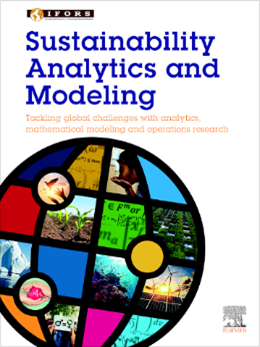
Sustainability Analytics and Modeling (IFORS). Four EURO Special Issues. Deadline 30th/31st December 2025.
https://www.sciencedirect.com/journal/sustainability-analytics-and-modeling/about/call-for-papers
https://euro2025leeds.uk/publications/
-
Sustainability and Humanitarian Logistics and Supply Chain Management: Models, Applications, Emerging Topics
AIMS AND SCOPE
This special issue invites papers that examine strategies for enhancing resilience against disasters and crises, with a focus on preparedness, response, and recovery. We seek contributions that explore how to design and implement efficient, effective, equitable, and sustainable solutions to mitigate the impact of such events and improve humanitarian logistics and supply chain management. The call is associated with the 34th European Conference on Operational Research in 2025 (https://euro2025leeds.uk/), but all studies that fit the topic of the special issue are welcome.
In an era marked by increasing global disruptions, ranging from natural disasters and pandemics to geopolitical conflicts and climate change, the role of sustainable and efficient humanitarian logistics and supply chain management (HLSCM) has never been more critical. Effective HLSCM ensures the timely and equitable delivery of essential goods and services to vulnerable populations while minimizing environmental and social impacts. This special issue aims to advance the discourse on sustainability-driven strategies, innovative models, and emerging applications that enhance the resilience, responsiveness, and efficiency of humanitarian supply chains.
Guest editors: Sibel Salman, Davood Shiri, M. Ali Ulku
Submission deadline: 30 December 2025 -
Shaping Sustainable Cities: Mainstreaming Assessment Methods and Development Strategies for Resilient, Circular, Digital and Inclusive Cities. Analytics and OR applications at EURO 2025
This Special Issue specifically emphasizes the role of assessment and evaluation methods and development strategies in supporting the development of the built environment and including citizens in the transformation of cities.
Guest editors: Sara Torabi Moghadam, Patrizia Lombardi, Virginia Pellerey, Rossana Riccardi, Cynthia Chen
Submission deadline: 31 December 2025 -
Special Issue (SI) on Sustainable and resilient retail supply chains: Addressing current and future challenges in modern retailing
Retail supply chains are the key to ensuring efficiency, customer satisfaction, and long-term success in an increasingly globalized and dynamic market environment. The pivotal role of the retail industry in our daily lives and societal trends is reflected by the importance of the retail sector for any economy. For instance, wholesale and retail account for around 10% of gross value added in Europe, and with 30 million employees, around 13% of all workers are employed in the retail sector. Research in this area has therefore gained increasing attention and is well-needed across all retail sectors, from grocery to fashion retailing and consumer electronics. Major challenges for retailers are ensuring efficient operations while reflecting sustainability and resilience issues. Retail substantially contributes to emissions, resource consumption, and waste, driving the need for sustainable solution approaches. Simultaneously, retailers face increasing uncertainties in global markets, disrupting their operations and potentially threatening entire supply chains. Potential threats are climate impacts, political issues, and pandemics. These challenges must be incorporated into the planning approaches and require advanced decision support and tools.
Guest editors: Manuel Ostermeier, Heinrich Kuhn, Pedro Sanches Amorim
Submission deadline: 31 December 2025 -
Special Issue: Towards Sustainability in Global Supply Chains - Analytics and OR applications at EURO 2025
Sustainable supply chain management has received considerable attention over the last few decades, both in academia and in practice. While the initial approaches to global supply chain management focused on the economic advantages and disadvantages of going green, it soon became widespread to include environmental objectives as well. In time, the integration of the social dimension of sustainable development also became of considerable interest. Today, it is becoming increasingly important to follow the 3 Ps of sustainability (people, planet and profit) when designing and operating sustainable supply chains. This is being driven by societal and customer demands, regulatory initiatives, such as supply chain due diligence, and competition, among other factors.
Guest editors: Karsten Kieckhäfer, Ana Paula Barbosa Povoa, Renzo Akkerman
Submission deadline: 31 December 2025
Posted on 2025-11-26 by Sarah Fores-